
By Jerry Nelson
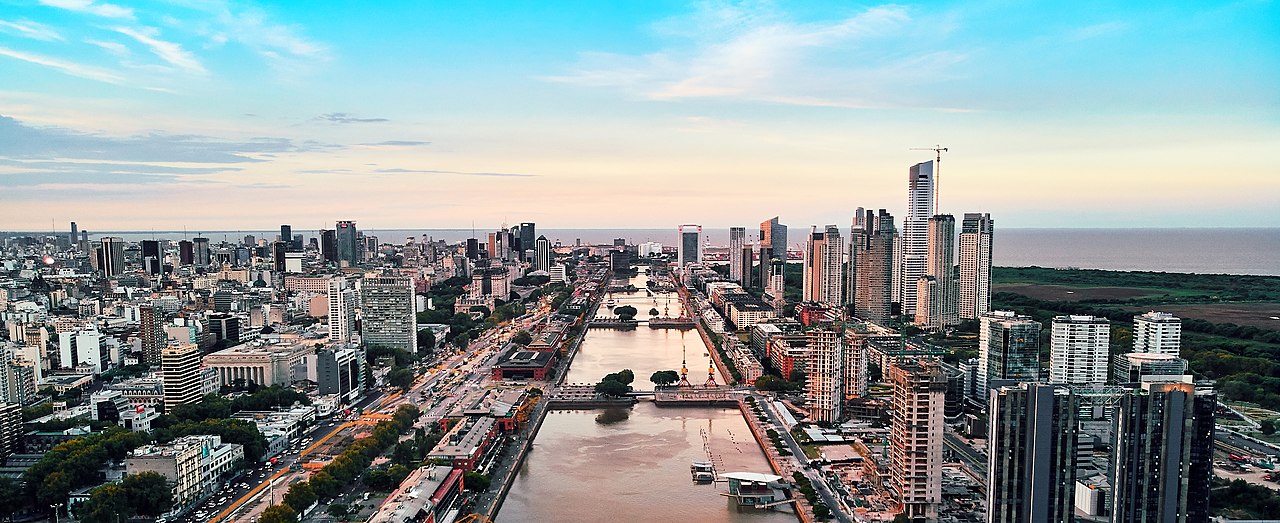
As the plane descended into Buenos Aires under the cover of night, the city sparkled below like a sea of stars. The darkness was broken by a grid of golden lights, sprawling endlessly across the landscape. From the window, you could see the faint shimmer of the Rio de la Plata, a silver ribbon under the moonlight, and the silhouettes of high-rises in Puerto Madero and the iconic Obelisco glowing softly in the distance.
The city seemed alive even at this hour—cars wove glowing paths along highways, while football pitches and parks dotted the suburbs with their own light. The anticipation grew as the wheels touched the runway at Ezeiza, marking the beginning of a new journey.
In that moment, I was simply a newcomer, caught between the life I had left behind and the one waiting to unfold, unaware that these first hours would become the lens through which I’d measure everything to come.
After landing at Ezeiza, I plunged into the bustling flow of immigration. The brightly lit hall buzzed with Spanish and Portuguese. My rusty Spanish earned a smile from the immigration officer as I handed over my passport. Exhausted but exhilarated, I was finally here.
With my luggage in tow, I spotted Alejandra waiting for me. Her warm “¡Bienvenidos!” eased my nerves as she took my duffel bag and led me into the humid night. The city, far from asleep, glimmered in the distance as we drove off.
The ride from Ezeiza started with industrial zones and gave way to urban sprawl. Our driver tried a mix of broken English while I fumbled in Spanish, and Ale pointed out landmarks I could barely see in the dark. The glowing facades of grand European-style buildings soon came into view, revealing the unique charm of Buenos Aires.
Belgrano welcomed us with its tree-lined streets and art deco charm. The doorman greeted us politely as we entered the condo. On the balcony, I took in the city at night—snippets of conversation, distant traffic, and the faint strains of a tango floated up.
Too energized to sleep, I stood at the window watching life unfold below—a couple walking their dog, an old man with fresh bread, and young friends laughing down the street. It was my first glimpse of Buenos Aires, a city already pulling me into its rhythm. This was the start of something new, both familiar and foreign, full of stories waiting to be told.
My first morning in Belgrano began early, despite the lingering jetlag. The streets were already alive—elegant women walking small dogs, businesspeople rushing to work, students chatting outside corner cafes. I let the neighborhood guide me, exploring without a plan.
Cabildo Avenue was my first stop, its French-style mansions now home to boutiques and embassies. Ornate balconies and carved stone facades told stories of Argentina’s golden age, while sleek modern buildings stood as reminders of the present. The mix of old and new felt both striking and natural.
Later, Ale and I visited Recoleta Cemetery. Its grand entrance opened to a maze of mausoleums that felt more like an art gallery than a graveyard. Evita’s tomb drew a crowd, but I was captivated by the quiet beauty of marble angels and intricate family crypts. It was a celebration of life through death, unlike anything I’d seen before.
What stood out most was how Porteños moved through the city. Unlike the detached rush of American cities, people here made eye contact, exchanged greetings, and seemed present in their surroundings.
Over the weeks, the kiosks became landmarks in my wandering. These tiny corner shops sold everything—cigarettes, snacks, phone cards—and the owners seemed to know everyone. I watched one vendor juggle political debates, tourist directions, and transactions, a seamless blend of efficiency and connection.
Crossing Avenida del Libertador felt like a game of strategy. Its wide lanes and medians filled with rose gardens added to the city’s grandeur, as did its tree-lined streets and ever-present shade.
The street art amazed me. Massive murals transformed walls into canvases for tango scenes and surreal cityscapes. Even the smallest pieces felt deliberate, woven into the city rather than imposed on it.
By afternoon, I noticed the city’s rhythm slow. Shops closed for breaks, and long lunches replaced the quick meals I was used to. At a cafe, I watched people linger over coffee and medialunas, conversations flowing easily without the distraction of phones.
Every corner revealed something new—a hidden bookstore, a plaza of chess players, a bell tower marking time with music. Belgrano felt grand yet intimate, historic yet alive. I began to understand why Porteños spoke of Buenos Aires with such pride. This city didn’t just remember its history; it lived it every day.
The café wasn’t in any guidebook, just a small spot tucked between a fruit stand and a hardware store. The aroma hit first—a mix of fresh coffee and buttery pastry. Inside, locals chatted over wooden tables worn smooth by time. From the kitchen came the sizzle of empanadas frying, blending seamlessly with the lively hum of conversation.
Golden and warm, the empanada’s flaky crust gave way to a steamy filling of spiced beef and onions, with a hint of paprika. The first bite was comforting and bold, crisp outside and rich inside. More than just a snack, it was a connection—a taste of the city’s soul.
A simple bite can unlock a place’s essence. The empanada isn’t just food—it’s history and community wrapped in dough, a symbol of Argentina’s roots. In this quiet café, far from the tourist crowds, it wasn’t just a meal; it was an invitation to experience the heart of Buenos Aires. Here, culture begins with an empanada.
Buenos Aires overwhelms the senses in the best way. One moment, you’re awestruck beneath the towering Obelisco, sunlight gleaming off its white facade. The next, you’re strolling San Telmo’s cobblestone streets, where tango melodies drift through open windows. Late-night cafés buzz with laughter and shared bottles of Malbec, while Palermo’s tree-lined streets hum with life.
But then, vulnerability sneaks in—a missed word in Spanish or a sudden longing for home. You’re reminded how far you are from what you knew, navigating a city that’s both exciting and unfamiliar. This push and pull is part of stepping out of your comfort zone. Joy and doubt coexist, but both are essential. Awe keeps you moving forward; challenges ground you, helping you grow.
In Buenos Aires, you learn to embrace it all—the highs and the lows, the wonder and the worry. Every emotion becomes a part of your story, shaped by the city’s vibrant rhythm.
On a quiet street in Recoleta, I paused to study a hand-painted sign outside a small bookstore. An elderly man in a worn hat approached, smiling warmly. Though his English was limited and my Spanish hesitant, we managed a conversation through gestures and a shared love of books. He led me inside, pointing to a shelf of vintage tango sheet music and sharing snippets about Buenos Aires’ passion for the art.
When I left, he patted my shoulder and said, “Bienvenido.” It wasn’t just a welcome to the city—it felt like an invitation into its culture and heart.
Buenos Aires has its own rhythm. Greetings often come with a kiss on the cheek, a custom that felt odd at first but quickly became second nature. Dinner is late, rarely starting before 9 PM, and lingering over a meal is expected.
Even simple rituals, like sharing yerba mate, reflect the city’s sense of connection. The careful preparation, the shared gourd—it’s not just a drink, but a moment of inclusion that says, “You belong.”
These quirks aren’t just cultural differences; they’re windows into a way of life defined by warmth, tradition, and generosity. In Buenos Aires, every interaction feels like a colorful thread in the city’s vibrant tapestry.
My first day in Buenos Aires was a whirlwind of awe and discovery. The city greeted me with the clinking of glasses in cafés, vibrant street murals, and the irresistible aroma of empanadas. Amid the excitement, there were moments of dissonance—a wrong turn, a lost word, a longing for the familiar. But that was the magic: Buenos Aires wasn’t bending to my world—it was inviting me into its own.
This is just the beginning. There are markets to explore, tangos to witness, and locals whose perspectives will shape my understanding of this city. Each moment will deepen my experience, not just of Buenos Aires but of life as an expat immersed in a new culture.
There’s beauty in stepping into the unknown. Buenos Aires has already nudged me out of my comfort zone, making every detail feel alive. This city is a reminder that growth comes from embracing the unfamiliar—and that the best stories unfold when we take the leap.
BIO: Jerry Nelson is a freelance writer and experienced expat living in Buenos Aires. With a passion for global travel and storytelling, he shares insights that resonate with travelers and remote workers. Ready to bring your ideas to life? Check out his services on Fiverr: https://www.fiverr.com/jandrewnelson
Wanderlust Journal: We are back in action. Have you checked out the travel stories there recently? Well, I’d wait as we’re about to start publishing some work from travels in Italy by Cindy Hill and Sean Prentiss. (Through Wild Dog Press).
SUBMISSIONS OPEN! We’re taking ideas through the website contact form, just give a sense of what you want to share with our international audience of over 179,000 so far! We focus on personal experiences, approx 1500 words, include a short synopsis and bio please. Thanks, Brianna and Sarah
If you are looking for a developmental editor, check out how I can help your writing become what you aim for, building upon your skills and showing you patterns that might or might not like to continue using…
Let me know if you have any questions, cheers.
Donations really help. Wanderlust Journal is a free online resource for publishing and reading travel essays and photo-stories. Same for Substack. Pretty much for everything I do…! It’s lucky I live in a little caravan (Travel trailer to you) and enjoy nature more than shopping. Anyway, even if you can only give a little, it helps me do what I’m committed to doing, ever since a teenager, and that is documenting other lifestyles, cultures, experiences. Think of these projects next time you are able to give a little, thank you.
Photo from Wikipedia

 Wanderlust
